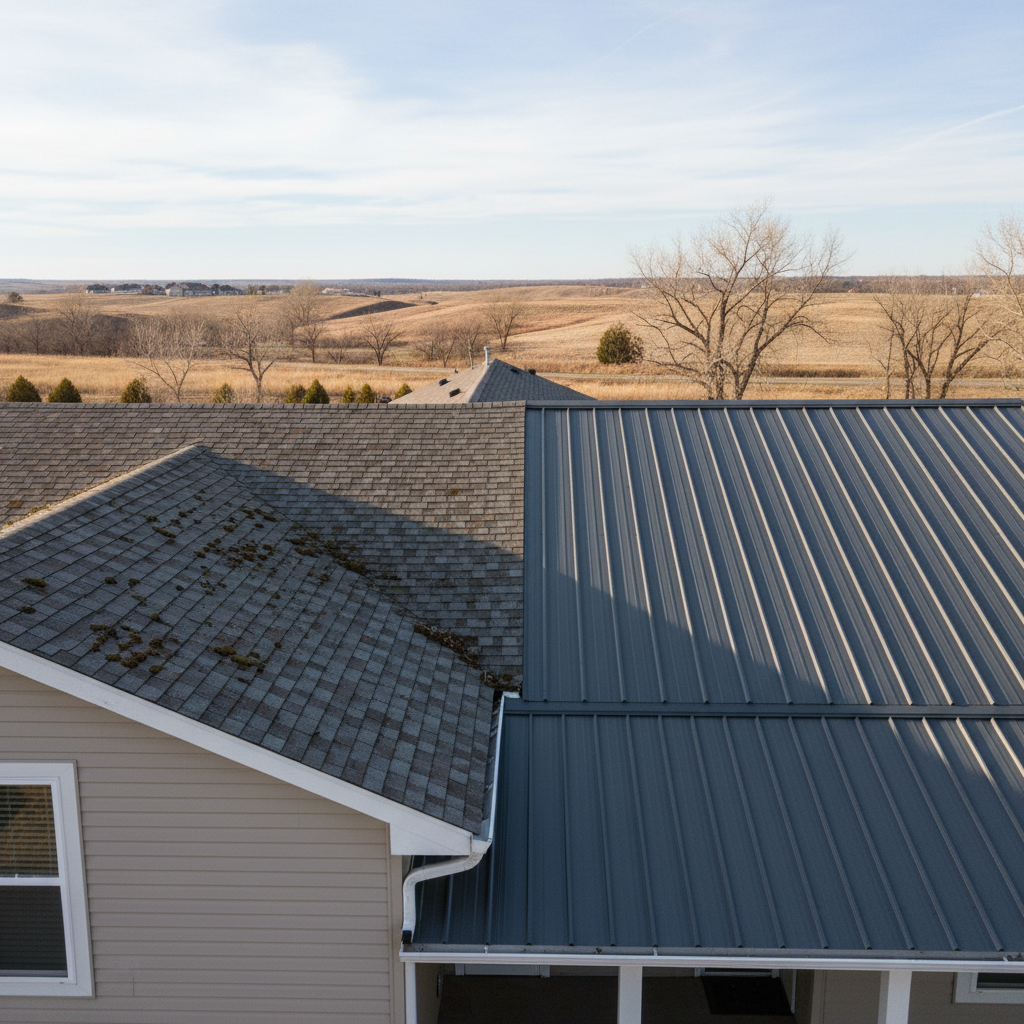
Alright, let's talk metal roofs. More and more folks around Sioux Falls are looking at metal, and for good reason. It's tough, looks sharp, and can really last. But when you start digging, you'll quickly run into two main types: standing seam and exposed fastener. What's the real difference, and which one's right for your place?
Exposed Fastener Metal Roofing: The Workhorse
This is probably what you picture when you think of a metal roof on a barn or a commercial building. It's got those distinct ribs and you can see the screws holding it down. We call it exposed fastener because, well, the fasteners (screws) are visible on the surface of the panels.
The Good Stuff:
- Cost: This is usually the big one for most homeowners. Exposed fastener systems are generally more affordable upfront. The materials are less complex to manufacture, and installation can be quicker, which saves you money on labor.
- Installation: It's a pretty straightforward process. Panels are overlapped and screwed directly to the roof deck or purlins. This means less specialized equipment and often a faster turnaround time.
- Durability: Don't get me wrong, it's still a tough roof. These panels are typically made from steel, often 29-gauge or 26-gauge, and can handle a lot of what South Dakota throws at it – hail, heavy snow, you name it.
The Not-So-Good Stuff:
- Maintenance: This is where you might run into issues down the road. Those exposed screws? They've got washers under their heads to seal them. Over time, with our freeze-thaw cycles and UV exposure, those washers can degrade. When they do, you've got potential leak points. You'll likely need to re-tighten or replace screws every 10-15 years, which adds to long-term maintenance.
- Appearance: It's got a more industrial look. Some people love it, some don't. The visible fasteners and panel overlaps are part of its aesthetic.
- Lifespan: While the metal itself can last a long time, the need for screw maintenance means the effective, leak-free lifespan is often shorter than standing seam – maybe 25-40 years with proper upkeep.
Standing Seam Metal Roofing: The Premium Choice
Now, standing seam. This is the sleek, modern look you see on a lot of higher-end homes and commercial buildings. The panels connect with interlocking seams that stand up vertically, hence the name. Crucially, the fasteners are hidden.
The Good Stuff:
- Durability & Lifespan: This is where standing seam really shines. Because the fasteners are concealed, they're protected from UV rays, moisture, and the elements. This dramatically reduces potential leak points. These roofs can easily last 50-70 years, often outliving the house itself. They're typically made from thicker gauge steel (24-gauge or 22-gauge) or even aluminum.
- Maintenance: Minimal. Once it's installed correctly, you're pretty much set. No screws to worry about, no washers to degrade. Just keep it clean, like any roof.
- Appearance: It's a clean, continuous look. The vertical lines add a lot of curb appeal, and you don't see any screw heads. It's a premium finish.
- Weather Performance: Excellent. The interlocking seams allow for expansion and contraction of the metal without stressing the fasteners, which is a big deal with our wild temperature swings here in Sioux Falls. One day it's 40 degrees, the next it's -10.
The Not-So-Good Stuff:
- Cost: Yep, it's more expensive upfront. The materials are more complex to fabricate, and the installation requires specialized tools and a higher skill level. This means more labor cost.
- Installation: It takes longer and requires experienced installers who know how to properly form and seal those seams. You don't want just anyone putting this on your house.
Which One Should You Choose for Your Sioux Falls Home?
Honestly, it boils down to your budget and what you prioritize. If you're looking for a tough, good-looking roof that won't break the bank upfront, and you don't mind a bit of maintenance down the line, exposed fastener is a solid choice. It'll definitely outperform asphalt shingles in terms of longevity and storm resistance.
But if you're building your forever home, or you just want the absolute best performance, lowest long-term maintenance, and the sharpest look, standing seam is the way to go. Yes, you'll pay more upfront. But when you factor in the extended lifespan, the minimal maintenance, and the peace of mind knowing you've got one of the most robust roofs available, it often pays for itself over time. Especially with our South Dakota weather – the hail, the heavy snow loads, the intense sun in summer – that hidden fastener system just holds up better for the long haul.
For most residential applications around here, especially if you're planning to stay in your home for decades, I usually lean towards standing seam. It's an investment, sure, but it's one that truly protects your home and adds significant value. If you're still on the fence, give us a call at Sioux Falls Roofing Company. We can walk you through the options, show you samples, and give you an honest quote for both systems. We've put enough roofs on homes in neighborhoods like the Tea-Ellis Road area to know what works best around here.